
Nobody expects to see type 2 diabetes in their own lab results. Especially not someone who had already fought hard to get their health back once and swore they’d never end up there again.
But that’s exactly what happened to our founder, Dr. Elena Villanueva.
After spending nearly a decade fighting a myriad of chronic symptoms and making what she thought was a full recovery, Elena never imagined that what was tearing her down wasn’t mold, toxins, or some mystery autoimmune condition. It was stress. The kind of chronic, unmanaged stress that quietly wears down your health while you’re too busy to see it happening.
But her story doesn’t end there. Seven months later, her numbers were back in range, and her body began to recover. Because the thing that changed everything wasn’t a medication or diabetes-specific supplement. It was a shift in perspective.
Her story highlights something that is often overlooked in conventional care. Stress isn’t just an emotion. It shows up in your labs, ages your body, and, left unchecked, can drive you straight into the chronic diseases most people assume are just bad luck. Here’s what happened and what she did about it.
Elena knew what chronic illness could do to a body. She’d lived it, fought her way out of it, and spent years helping others do the same. She wasn’t going to let that happen again. But stress has a way of sneaking up on even the most health-conscious people.
Looking back, the signs had been there for a while. She just wasn’t looking for them. Her sleep was broken and unrestful. Her mind raced constantly. Anxiety she hadn’t experienced in years had slowly crept its way back in. She was tired all the time, losing hair in the shower, clenching her jaw at night, and brushing off a backache that wasn’t going away. Her libido had quietly disappeared. And when she finally checked her blood pressure after seeing her lab results, it was sitting between 170 over 130 and 180 over 150. That’s not borderline high. It’s dangerous.
Her fasting blood glucose told the same story. It had climbed from its healthy historical baseline in the low 80s all the way up to 99, and her A1c had hit 5.8. For context, Elena had always run a glucose level of around 88 and an A1c of 5.0. Those numbers had been consistent for years. Seeing them jump like that wasn’t just surprising. It was a wake-up call she couldn’t ignore.
On the surface, nothing had really changed. She was doing what she always did, running her businesses hard and pouring herself into work that she believed in. But without realizing it, she had let the daily stress cross a line from manageable to something far more damaging. She wasn’t eating enough during the day. She wasn’t drinking enough water. She wasn’t moving her body or taking breaks. And the story she was telling herself about everything she had to get done was keeping her body in a constant stress response.
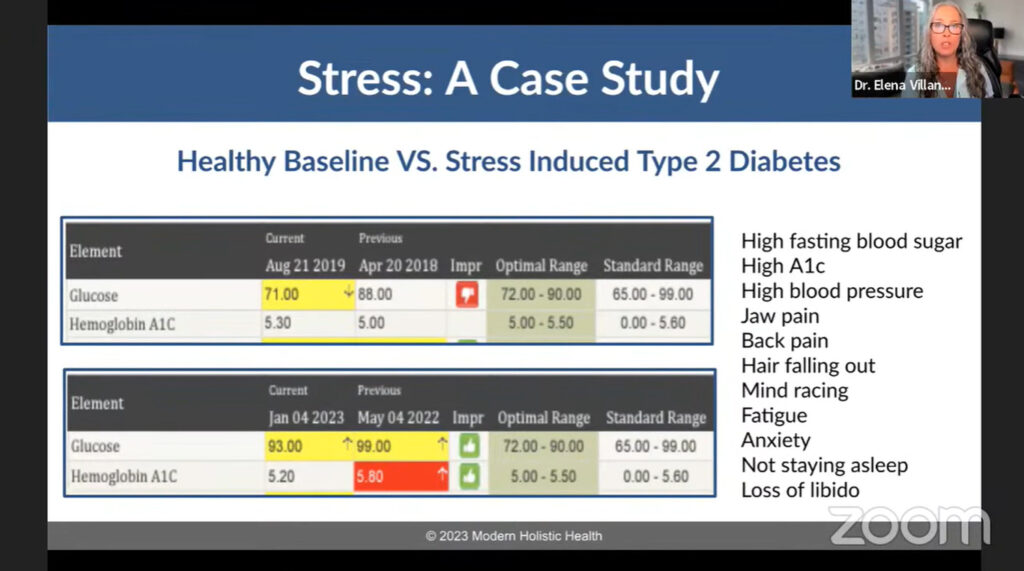
Seeing those results in black and white changed everything for Elena. She couldn’t explain them away or push them to the back of her mind anymore. So she did what she’d always told her clients to do: she stopped, got honest with herself about what was really going on, and decided something had to change.
Most people think cortisol is the enemy. It’s not. In short, healthy bursts, it’s actually something your body needs. It regulates blood sugar, sharpens focus, supports your immune system, and gets you out of bed in the morning. Cortisol itself isn’t the problem. The problem is what happens when it never gets a chance to come back down.
When stress becomes chronic, cortisol stays elevated all day, every day. And at those levels, it stops being helpful and starts being destructive. Long-term high cortisol is directly linked to type 2 diabetes, obesity, heart disease, high blood pressure, depression, hair loss, and disrupted sleep. It doesn’t just make you feel awful. It physically drives the body into disease, sometimes before you even realize anything is wrong.
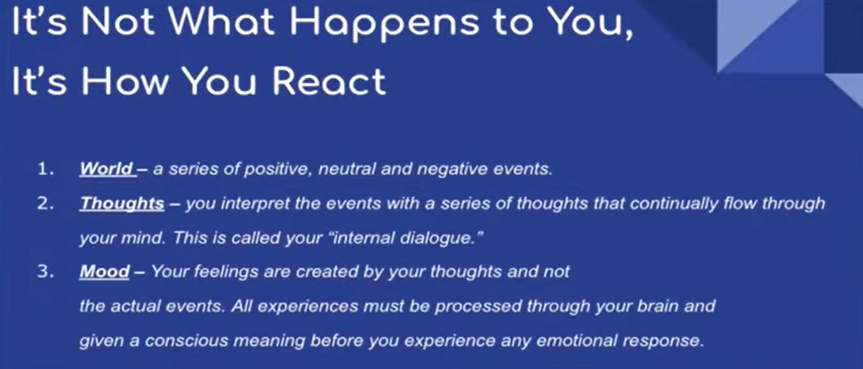
But here’s the part most people never hear, and honestly, the part that matters most: your stress response isn’t just triggered by what’s happening in your life. It’s triggered by the story you’re telling yourself about what’s happening. Your thoughts influence your physiology. The way you interpret stress shapes your hormonal response. They show up in your labs, in your symptoms, and in your body’s ability to heal.
No supplement reversed her diabetes. No medication either. What changed everything was learning to tell herself a different story.
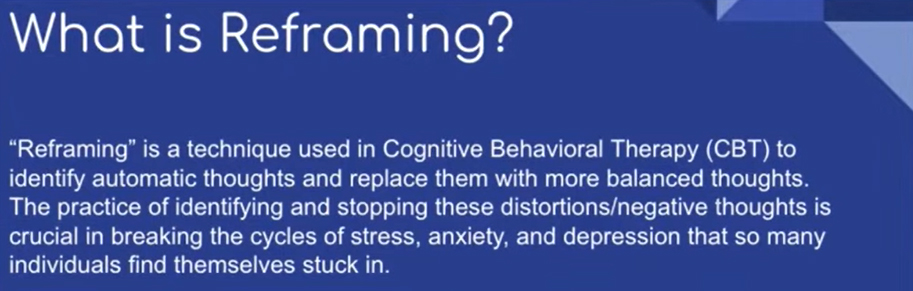
The tool she used is called reframing. It comes from cognitive behavioral therapy, and at its core, it’s pretty simple: you learn to catch the automatic thoughts that are fueling your stress response and replace them with something more grounded and balanced. For Elena, the pattern ran deep. She had been carrying a belief for years that she had to push relentlessly just to keep up. That belief was flooding her body with cortisol every single day, even on the days when nothing was actually wrong.
When she started zooming out, stepping back from the day-to-day pressure and reconnecting with the bigger purpose behind her work, something shifted. The internal dialogue got quieter. The cortisol started coming down. And her blood sugar followed right along with it.
Once her mindset started to shift, the lifestyle changes came almost naturally. She started eating more during the day and eating better. She drank more water, took real breaks, got outside and moved her body, and actually made time for the people she loved. Nothing complicated or dramatic. Just the small, consistent things she hadn’t been doing that her body had clearly been in desperate need of.
Her genetic data confirmed what the reframing work was already showing her. It flagged a medium risk for diabetes and pointed straight to aerobic exercise, sleep, stress management, and meditation as the most important lifestyle factors for her specific profile. The data and the mindset work were telling the exact same story. She just had to be ready to listen.
Most people are looking for the answer in a supplement or a prescription. But one of the most important forms of medicine Elena had access to wasn’t in a bottle at all. It was in her own mind. The stories we tell ourselves, the emotional patterns we carry, and the stress we’ve learned to just live with all matter. These patterns don’t just affect how we feel. They create measurable changes in our biology. Address them, and the body finally has what it needs to heal.
Seven months after those alarming lab results, everything looked different.
The fasting blood glucose, which had climbed to 99, dropped back down to 93. The A1c that had pushed her into diabetic territory moved back out of it. Blood pressure down. Sleep better. Hair loss slowing. Anxiety fading. And a mind that had been racing for months was finally starting to settle.
And none of it came from medication or diabetes-specific supplements. It came from shifting her perspective, changing the story she was telling herself, and making small, consistent lifestyle changes that followed naturally once that shift took hold.
Her doctor never told her any of this was possible. But Elena already knew it was. She’d watched it happen with hundreds of clients over the years. She just hadn’t expected to need that lesson herself.
Her biggest takeaway from the whole experience? You don’t have to get it perfect. You just have to get honest, make a decision, and stay consistent. The body is far smarter and more resilient than most of us give it credit for. When you stop working against it and start giving it what it actually needs, it knows exactly what to do.
Stress is not just a feeling. It has measurable physical effects. Chronically elevated cortisol from prolonged stress is directly linked to type 2 diabetes, heart disease, obesity, high blood pressure, depression, and neurological decline. When conventional medicine hands you a diagnosis and a prescription, it’s treating the outcome, not the cause. Stress that goes unaddressed will keep driving the disease forward, no matter what medication you’re taking.
Your thoughts create chemistry in your body. The story you tell yourself about your life, your circumstances, your stress, creates a hormonal response that has measurable physical consequences. Chronic stress-based thought patterns increase cortisol, disrupt blood sugar regulation, suppress immune function, and accelerate aging. This isn’t abstract. It shows up in labs.
Reframing isn’t just positive thinking. It’s neurological rewiring. Learning to identify the automatic thoughts that are driving your stress response and replacing them with more balanced, purposeful perspectives literally creates new neurological pathways in the brain. Over time, those new pathways become the default. The old stress cycles lose their grip. And the body follows.
Baseline tracking matters more than most people realize. The jump from a fasting blood glucose in the 80s to 99 is significant, even if 99 technically falls within the standard medical range. Knowing your personal baseline means you can catch these shifts early, before they become full-blown disease. This is why we encourage all of our clients to do regular testing and track their numbers over time.
Healing the whole person is the only approach that actually works. Physical symptoms, emotional patterns, lifestyle habits, and belief systems. They’re all connected. Addressing one without the others leaves the root cause intact. When every layer is addressed simultaneously, the body has what it needs to actually heal.
If your blood sugar is creeping up, your sleep is off, your anxiety is returning, or you just don’t feel like yourself, don’t brush it off. Don’t chalk it up to getting older or being too busy. And don’t wait for things to get worse before you take action.
Chronic stress is quietly behind more serious health conditions than most people realize. It shows up as fatigue, hair loss, weight gain, and racing thoughts long before it ever appears in your labs. And by the time it does show up, it’s already been doing damage for a while.
She knew better than most what chronic illness could do. And stress still caught up with her. Silently, until her lab results made it impossible to ignore.
The good news? When you find the root cause and address it, the body responds fast. You don’t have to keep pushing through and hoping things even out on their own.





What is the primary goal of this appointment?
Focus on physical symptoms, lab tests, gut health, toxins, and targeted nutrition protocols.
Focus on mental wellness, trauma processing, stress management, and cognitive support.
What is the primary goal of this appointment?
Focus on physical symptoms, lab tests, gut health, toxins, and targeted nutrition protocols.
Focus on mental wellness, trauma processing, stress management, and cognitive support.